Paver Installation in North Pheonix Arizona
Pavers can change how a home feels the moment you pull up. A paver driveway adds curb appeal and helps with day to day use. A paver patio gives you a tough spot for chairs, grills, and family time. A paver walkway guides guests to your door and keeps feet out of rock and mud. Copper Rock Concrete builds these surfaces for North Phoenix homes that take sun and heat all year. Our crew sets each paver with care, so the pattern looks right and the base holds its shape. Call us today and tell us what you want to build.
What is a Paver Installation Service?
A paver installation service in North Phoenix, AZ covers the full build of a paver surface. The job starts with a talk at your site. You pick the goal and the look. We help you choose paver size, color, and layout. We plan slope for water flow and map out edges and turns. We remove old material when needed. We dig to the right depth and build a strong base. We set bedding sand, place the pavers, and lock joints with sand. We finish edges, then review the full area with you.
Many homeowners search "pavers near me" and want a fast, clear answer. You want to know cost, time, and what the work looks like. You also want to know who shows up and who stays on the job. Our team keeps it simple and direct.
Copper Rock Concrete can also tie paver work into other builds. A paver patio can meet a
concrete patio edge or a concrete pool
deck border. A paver walkway can link to a
concrete walkway section near steps. Some yards need a
retaining wall or a block wall
to hold grade and guide drainage. We can plan those pieces as part of one job.

What Sets Our Service Apart
Most problems start under the pavers. A weak base leads to low spots and loose joints. Our crew treats base work like the main job, not a side task. We match base depth to the use. Patios, walk paths, and driveway pavers do not take the same loads. We set edges the right way, since edge restraint keeps the field tight.
We also plan for Arizona heat. Sun can push materials to expand and shift. Water can wash sand from joints during monsoon rain. We use proven build steps, and we check grade and compaction as we go. Your project gets a layout that fits the space and the traffic. Want a paver surface that looks great now and still looks great after a few summers? A strong base and good joint work make that happen. Our crew focuses on those details on every job.
Why Choose Us?
We are residential and commercial concrete pavers that serve North Phoenix with clear, local service. You get straight answers and skilled work. You also get a team that respects your home. We show up ready, and we keep your site clean. We protect nearby walls, gates, and plants as we work. We haul off waste and old material when the scope calls for it.
Many people call us after searching "paving contractors near me" or "paving companies near me". They want a crew that can handle outdoor flatwork and hardscape in one place. We do that. Our work includes pavers, concrete work, and grade control. You can pair your pavers with concrete work such as a
slab, a pad, or
concrete repair on nearby areas. You can also ask us about concrete cost for a side pad,
stamped concrete, or a new pour.
Paver Patios
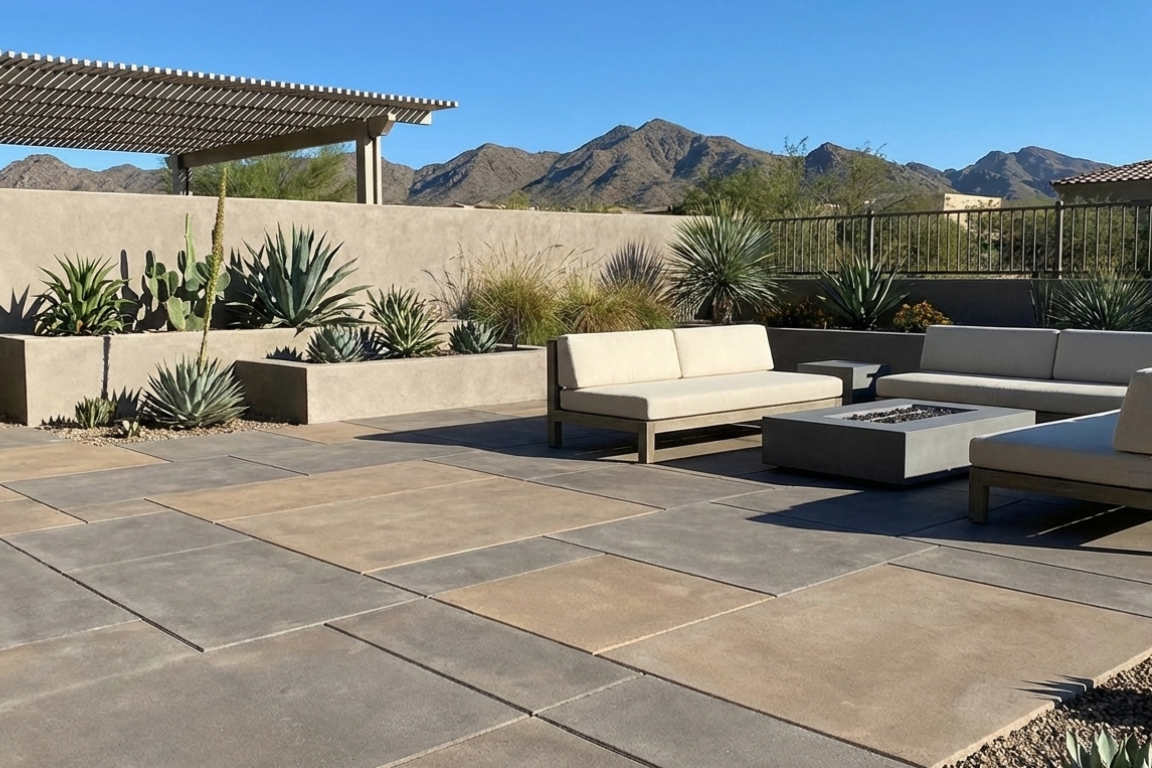
A paver patio gives you a tough outdoor space. It can sit near a pool, a grill, or a back door. Pavers give you many layout choices. You can pick a running bond, a basket weave, or a herringbone pattern. You can also blend colors for a desert look that fits Arizona homes.
Patios need a base that drains well and holds shape under foot traffic. We set the grade, then compact base layers in lifts. We place bedding sand, then set the pavers to line and height. We add joint sand and lock it in place. A good patio feels firm under chairs and tables. It also helps water move away from the home.
Paver Walkways
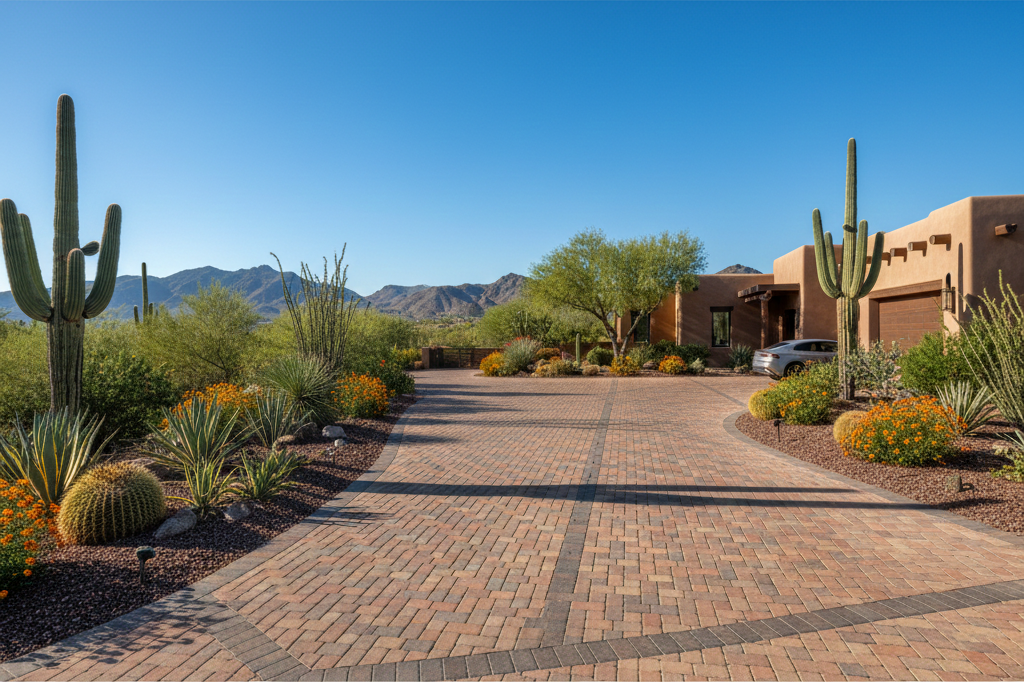
Walkways guide how people move across your property. A good path keeps guests off rock beds and helps kids and pets stay on track. Pavers also let you curve around plants, planters, and yard features. Walkways need safe footing and good drainage. We shape the path, then set base and sand to match the layout. We cut pavers for tight turns and neat borders.
We can also add small soldier courses or contrasting bands for a framed look. Many owners compare pavers with a poured path. Both work well for the desert climate. Pavers win when you want more pattern and easy spot repairs. Concrete wins when you want one slab surface. Our crew can talk through both, then help you choose.
Paver Driveways
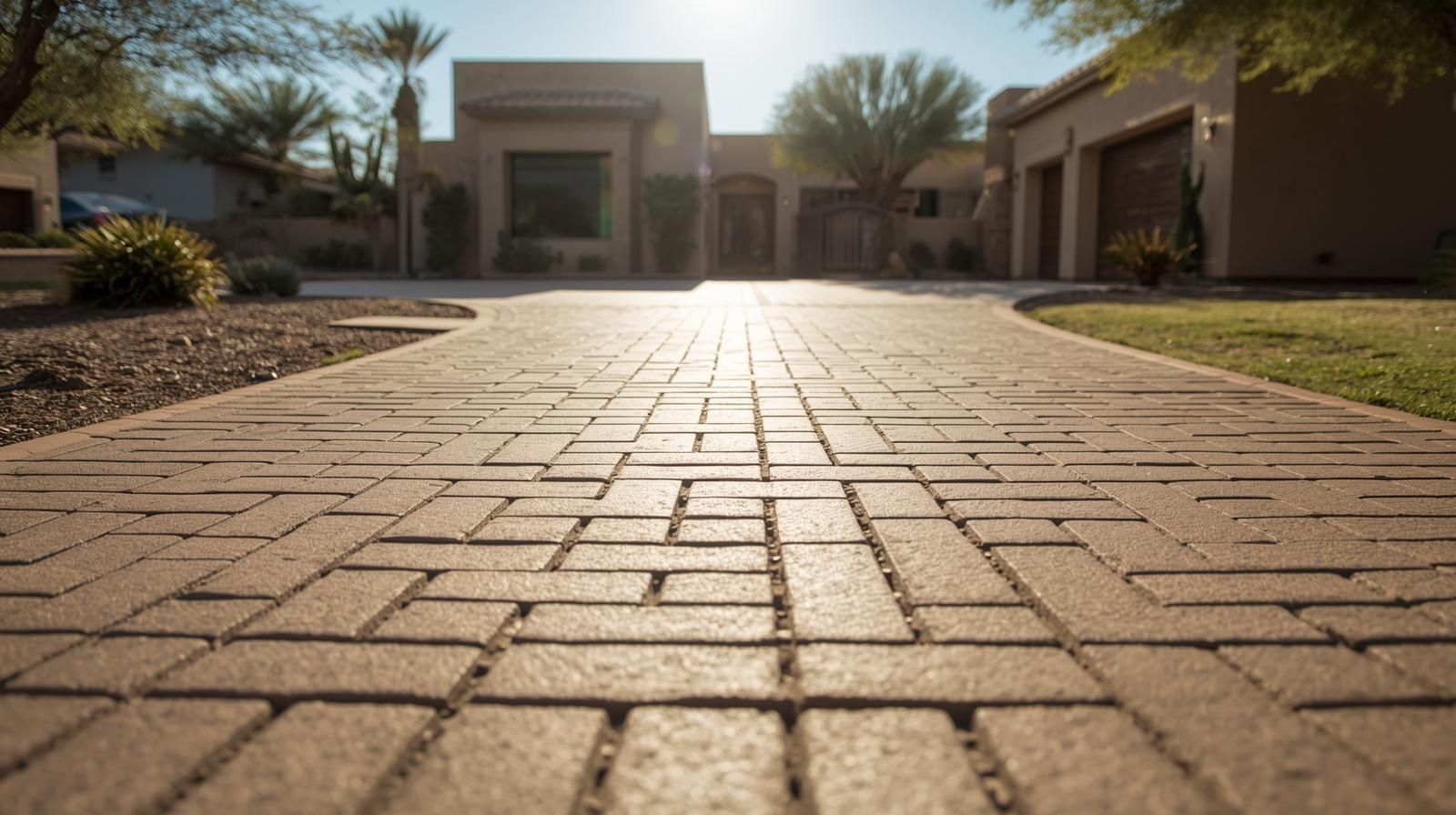
Pavers can handle vehicle weight when the base and paver thickness match the load. Drive lanes take more force than patios. The base must be deeper and compacted well. Edge restraint and joint lock matter even more on a driveway. Driveway pavers can raise curb appeal fast. It can also help with spot repairs. If a section takes a hit, the repair can focus on that area.
Many homeowners also like the look of a patterned drive apron near the garage. People often search driveway paving near me and want a fast estimate. We can give you a clear scope, a layout plan, and a price range once we see the site. We also talk about access during the build, so you know where to park.
Signs You Need To Hire a Paver Contractor
Pavers hold up well in Arizona, yet time and ground movement affect every outdoor surface. Heat, rain, foot traffic, and vehicle weight place stress on the base under the pavers. When that base shifts or loses support, the surface above starts to change. Spotting problems early can save money and protect nearby areas such as driveways, patios, and walk paths. A skilled paver contractor can fix the cause, not just the surface issue.
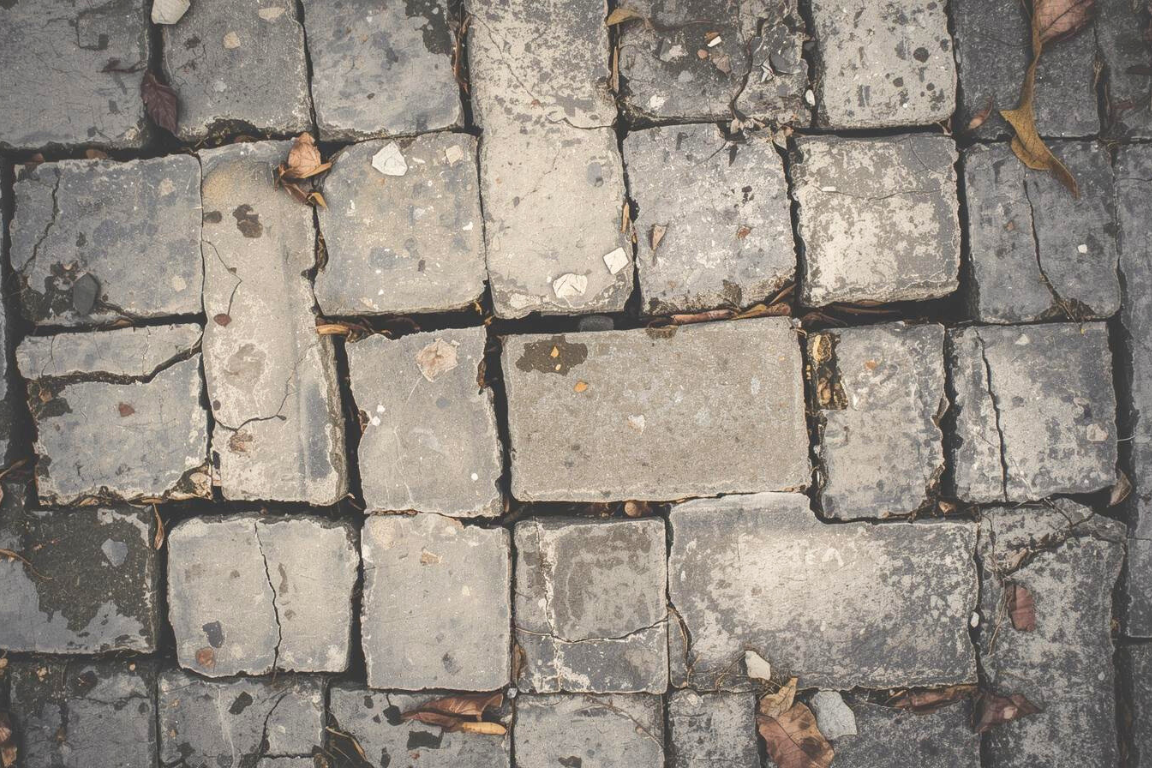

A worn paver layout can change how a home feels from the street and the backyard. New pavers or targeted repairs can refresh both areas at the same time. A site visit gives clear answers and helps set the right scope for the work.
Our Step-by-Step Paver Installation Process
A lasting paver surface depends on planning and base work more than appearance alone. Each step builds on the last. Skipping steps or rushing prep leads to early problems. Our crew follows the same proven process on every paver patio, walkway, and driveway. This approach supports long-term use in Arizona heat and seasonal rain.
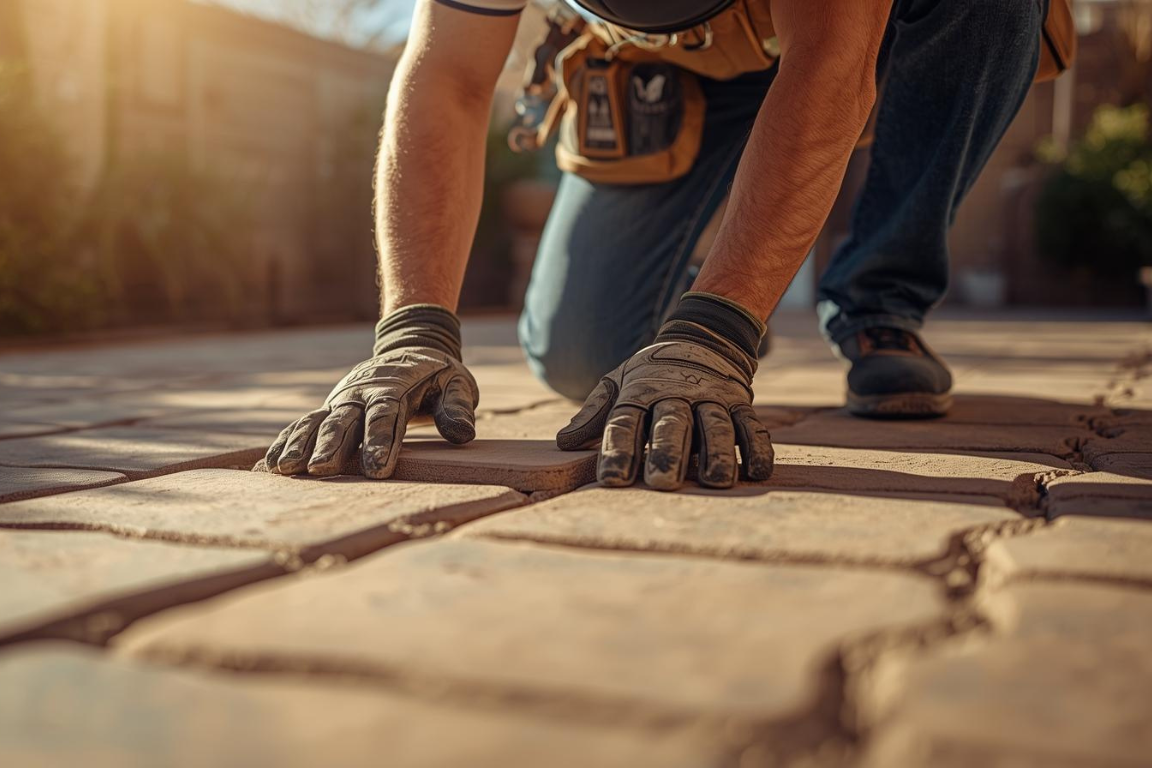
A clear process protects your investment and reduces long-term repair needs. Proper planning, base work, and joint lock help pavers handle heat, rain, and traffic year after year.
Paver Installation FAQ's
Homeowners often have questions before starting a paver project. Cost, timing, upkeep, and long-term performance all matter when choosing a surface for your home. The answers below address the most common concerns we hear from North Phoenix clients. Each response explains what to expect and how our process works in real conditions. Clear answers help you plan with confidence and avoid surprises during the build. If you have a question not listed here, a site visit gives the most accurate guidance for your space.
What is the main difference between pavers and poured concrete for a patio or driveway?
Pavers are separate units set on a compacted base, with sand in the joints. Poured concrete is one slab that cures as a single piece. Pavers give you more pattern choices and make small repairs easier. Concrete can cost less on some layouts and works well for wide, open areas. Each option needs good base work and proper slope. A site visit helps us match the surface to your goals, traffic, and budget.
How long does paver installation take for a patio, walkway, or driveway?
Time depends on size, access, and how much prep the site needs. A small paver walkway can move fast once layout and base work are done. A larger patio or driveway takes more days, since base depth and compaction steps take time. Cuts and borders add time too. Weather also affects the pace, since heavy rain can delay base work. We give you a clear schedule after we see the site.
Do pavers hold up in the North Phoenix heat and monsoon rain?
Pavers can hold up well in Arizona when the base and joints are built right. Heat can expand materials, so tight layout and strong edge restraint matter. Rain can move joint sand if the build lacks proper slope and joint lock. We grade the area for drainage and compact the base in lifts. We also finish the joints with sand that fits the job. Those steps help the surface stay firm and look good.
Can you repair or reset pavers that have low spots, loose pieces, or weeds?
Yes. Many paver problems can be fixed without tearing out the whole surface. We lift the affected area, then correct the base and bedding sand. We reset the pavers to the right height and line, then refill joints with sand. We also check edge restraint, since weak edges can lead to drift and gaps. Weeds often show up where joints lose sand or collect dirt. A reset and joint refill can reduce that issue.
Do I need a retaining wall or block wall with my paver project?
Some yards need grade support near a paver patio or driveway. A retaining wall can hold soil back and stop washout near the edge. A block wall can frame a space and help with privacy and yard layout. We look at slope, drainage paths, and nearby structures during the site visit. If wall work makes sense, we can plan it with the paver job. That keeps the yard stable and helps the paver surface drain the right way.