Stamped Concrete Services in North Phoenix Arizona
Stamped concrete gives homeowners a way to achieve decorative surfaces with the strength of poured concrete. This service is ideal for patios, driveways, walkways, and pool surrounds where appearance and durability both matter. Our stamped concrete services in North Phoenix, AZ helps homeowners who want patterned finishes that hold up under heat, foot traffic, and daily use. Each project focuses on proper base preparation, detailed imprint work, and finishes designed to last in desert conditions.
This option is often chosen for outdoor spaces that need visual appeal without the cost of natural stone or individual pavers. Patterns, textures, and color options allow stamped surfaces to complement many home styles. When installed correctly, these surfaces perform well and require less joint maintenance than unit-based systems.
What Is Stamped Concrete?
This is poured concrete that receives texture and pattern before it cures. Specialized mats press designs into the surface while the material remains workable. This process allows the slab to mimic stone, brick, tile, or custom textures without setting individual units. Some homeowners also refer to this finish as pressed concrete, embossed concrete, or stamp cement.
The result is a single, reinforced slab with a decorative surface. This reduces shifting and joint separation that often occur with segmented materials. The finished surface works well for areas that need strength and visual consistency.

Where Decorative Finishes Works Best
Stamped finishes work well across many residential spaces. The most common applications include patios, driveways, and walkways. Each area benefits in different ways based on layout and use. A stamped patio creates an outdoor gathering space that pairs well with seating areas and pools. A stamped concrete driveway adds visual interest at the front of the home while supporting vehicle traffic. Walkways benefit from textured finishes that improve traction and guide foot traffic. These surfaces integrate well with other features such as concrete steps, slabs, and pool decks. Proper planning allows patterns to align across connected areas for a cohesive look.
Stamped Concrete Patio Options
Decorative concrete patios remain one of the most requested decorative upgrades for outdoor spaces. Homeowners choose this option to improve outdoor living areas without switching to pavers. The surface stays continuous and reduces weed growth between joints. Stamped patio designs offer flexibility in both appearance and layout:
- Stone-style textures that resemble natural flagstone
- Brick and tile patterns for structured layouts
- Custom layouts that match existing hardscape features
- Integrated borders to define seating or dining areas
Color Options and Decorative Treatments
Color plays a major role in decorative masonry. Integral color blends pigment throughout the slab. Surface coloring adds highlights and variation after placement. Both methods can be combined for layered effects. Stains and release agents help define texture and depth. Lighter colors reflect heat better in outdoor spaces. Darker tones add contrast and visual weight. Stamped concrete near me searches often reflect Arizona homeowners looking for finishes that match surrounding landscaping and home colors. Color selection should consider sun exposure and nearby materials.
Patterns, Textures, and Finish Styles
Surface patterns come in a wide range of styles that suit different outdoor uses. These finishes create depth and variation across the surface while keeping the strength of poured concrete. Common pattern and texture options include:
- Stone and slate impressions
- Brick-style layouts for walkways and patios
- Tile patterns for structured spaces
- Wood plank textures for modern designs
Texture selection affects both traction and appearance. Rougher textures work well near pools and sloped areas. Smoother patterns suit patios and seating spaces. These options allow decorative surfaces to balance appearance, function, and maintenance needs. Finish details also influence performance:
- Embossed finishes paired with saw cuts
- Decorative borders that help guide expansion
- Surface treatments that affect long-term wear
Signs You Need to Hire a Stamped Concrete Contractor
Surfaces often show warning signs before serious damage occurs. Many homeowners overlook early changes and assume decorative issues are only cosmetic. In reality, surface problems often point to base movement, drainage issues, or finish breakdown. Recognizing these signs early helps protect the slab and extend the life of the decorative surface.
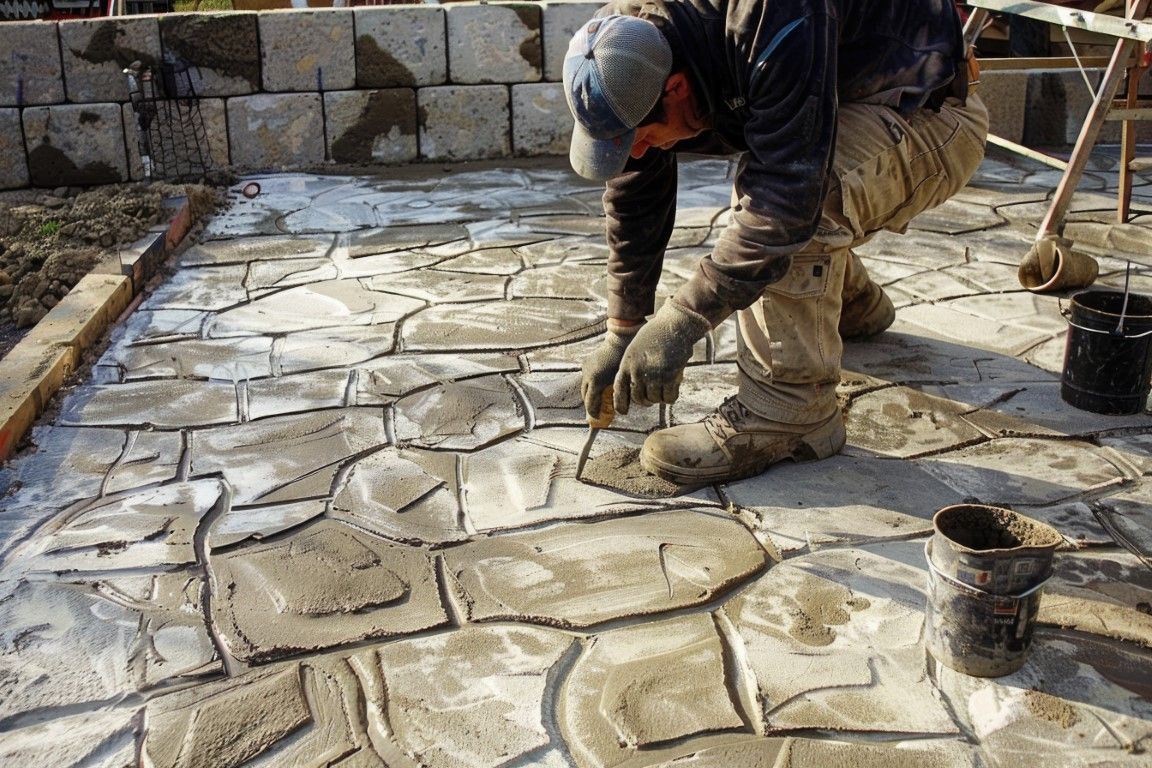

Structural issues don't all at once. Changes in surface texture, level, drainage, and color usually appear first. Addressing these signs early helps preserve both function and appearance. Professional evaluation allows repairs or restoration before full replacement becomes necessary and helps keep decorative surfaces performing as intended.
Stamped Concrete Repair and Maintenance
Repair focuses on cracks, color fading, and surface wear. Minor cracks can be treated to limit moisture entry. Worn sealers can be replaced to restore appearance. Resealing helps protect color and texture from sun exposure. Maintenance schedules vary based on traffic and exposure. Patios often need resealing less often than driveways. Prompt care reduces the need for full replacement and keeps surfaces performing as intended.
Stamped Concrete vs Pavers
Both of these offer different benefits. Stamped surfaces provide a continuous slab with fewer joints. Pavers allow individual unit replacement but require joint maintenance. Stamped concrete works well for large areas and consistent patterns. Pavers suit areas where future access below the surface may be needed. Cost, appearance, and maintenance goals help guide selection. Many homeowners choose stamped finishes when they want decorative results with a poured base.
Stamped Concrete vs Stained Concrete
Both fall under decorative surfaces, but they serve different purposes. The main difference lies in texture and visual depth. Stamped concrete uses pressed patterns to mimic materials like stone, brick, or tile. This option works well for patios, driveways, and walkways where texture and visual structure matter. The patterned surface creates shadow lines and variation that stand out in large outdoor areas. It also provide more grip underfoot, which makes them a strong choice for sloped spaces and pool decks.
Stained concrete relies on color rather than pattern. The stain penetrates the surface and creates tonal variation across the slab. This option suits modern patios, interior floors, and outdoor areas where a simple, flat surface fits the design. Stained finishes highlight the natural character of the material and work best on slabs with minimal surface flaws.
Maintenance needs also differ. Stamped materials requires sealing to protect both texture and color, especially in high-traffic areas. Stained surfaces also benefits from sealing, but the surface sees less wear since there are no raised patterns. Repair options vary as well. Patterned surfaces require careful matching during repairs, while stained slabs allow easier blending.
Our Stamped Concrete Installation Process
Installation requires careful timing, preparation, and coordination at every stage. Unlike standard flatwork, decorative finishes depend on proper base work and precise curing windows. This process is designed to support surface detail, color retention, and long-term performance. Each step builds on the last to protect the slab from movement, moisture issues, and surface wear.
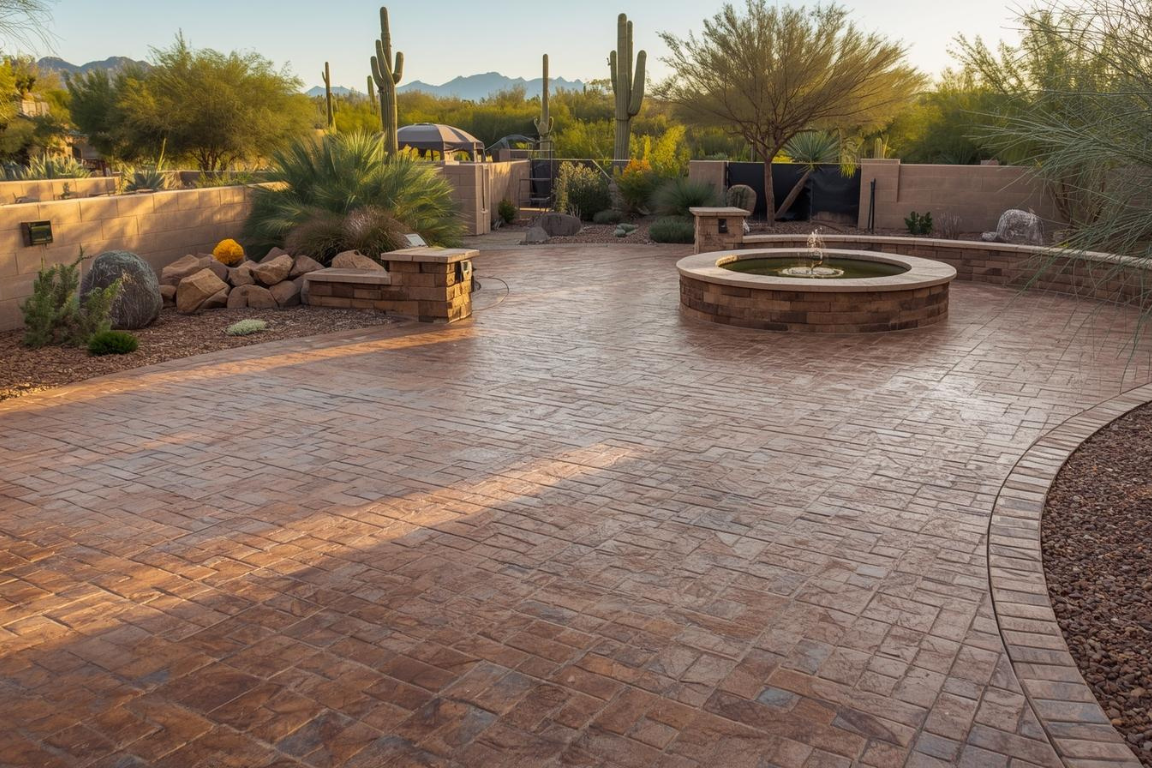
Each issue calls for a specific restoration approach based on severity and cause. Crack repair, leveling, resurfacing, and foundation work address problems at different stages of failure. Choosing the correct method helps extend slab life and reduce long-term costs. A proper evaluation guides whether improvements will restore performance or if replacement becomes the better option.
What Affects Stamped Concrete Cost
The cost depends on several factors. Size, thickness, and reinforcement influence material needs. Pattern choice and color complexity affect labor time. Access to the site also impacts pricing. Driveways and backyards with limited access require more preparation. Decorative borders and multiple color layers add detail and cost. For example, a patio cost often differs from driveway pricing due to thickness and load requirements.
Why North Phoenix Homeowners Choose Us
Homeowners choose our stamped concrete contractors for detailed planning and careful execution. Not only do we focus on commercial concrete projects, but we also specialize in residential projects, including retaining walls. Each project begins with a clear discussion of goals and layout. We focus on proper preparation and finish timing. Our team understands how heat and soil conditions affect decorative areas. We plan pours to limit stress and surface damage. Clear communication helps homeowners understand care and expectations. Surfaces should look good and perform well. Our approach balances both.
Frequently Asked Questions About Stamped Concrete
Homeowners often have questions before choosing decorative surfaces for patios, driveways, or walkways. Design options, durability, maintenance, and cost all affect the final decision. These frequently asked questions address common concerns we hear from homeowners who want clear expectations before moving forward.
How long does stamped concrete in Phoenix last?
It can last decades when installed on a solid base and maintained properly. Sealing and prompt repair help protect the surface from wear and moisture.
Is stamped concrete slippery?
Texture selection affects traction. Many patterns provide grip underfoot. Slip resistance can be improved with additives in the sealer.
Can stamped concrete be repaired?
Yes. Repair works well for cracks, fading, and surface wear. Repairs depend on slab condition and damage extent.
Does stamped concrete crack?
Yes, it can crack. Proper base preparation and reinforcement reduce risk. Control joints help manage movement.
How much maintenance does stamped concrete need?
Maintenance includes cleaning and periodic resealing. Frequency depends on traffic and sun exposure.