Retaining Wall Installation in North Phoenix Arizona
Retaining wall installation helps homeowners control elevation, protect property, and manage soil movement on sloped land. Copper Rock Concrete builds retaining walls in North Phoenix, AZ and North Phoenix. These structures support grade changes, prevent erosion, and create usable outdoor space where uneven ground once limited access. Homeowners contact a retaining wall contractor when soil shifts, drainage problems appear, or yard space needs structure. We focus on strength, drainage control, and long-term performance in Arizona’s desert climate.
What Retaining Wall Installation Involves
Installation involves more than stacking blocks or pouring concrete. Each area must resist soil pressure, handle water movement, and support nearby surfaces such as concrete patios, walkways, or driveways. The process starts with site evaluation to understand grade changes and soil conditions. Proper excavation sets the system height and footing depth.
Base preparation supports weight and prevents movement over time. Drainage systems guide water away from the area to reduce pressure behind it. The support structure is then built using reinforced concrete systems or stone materials based on site needs. Backfill is placed in layers and compacted to support the structure. This process protects the installation from shifting and helps it hold its position during seasonal rain and irrigation cycles common in the North Valley.

When You Need a Retaining Wall
Many homeowners do not realize a retaining wall is needed until damage appears. Sloped yards can lead to erosion, runoff problems, and limited usable space. Signs that construction may be needed include soil washing toward the home, pooling water after storms, or exposed roots near slopes. Homes built into hillsides often require structures to create level areas for
stamped concrete patios or walkways. Older installations may also fail over time due to age, water pressure, or poor construction. In these cases, retaining wall repair near me becomes a common search for homeowners who want to stop further damage. Installing a new structure or replacing an old one helps protect
concrete slab foundations,
pavers, outdoor surfaces, and landscaping.
Why Retaining Walls Fail Over Time
Structures often show warning signs before serious damage occurs. Many homeowners overlook early changes and assume the system will hold. In Arizona, heat, irrigation runoff, and shifting soil place constant stress on masonry structures. Knowing what to watch for helps you act before concrete repairs become more involved. These signs apply to concrete, block, and stone retaining walls across residential properties.
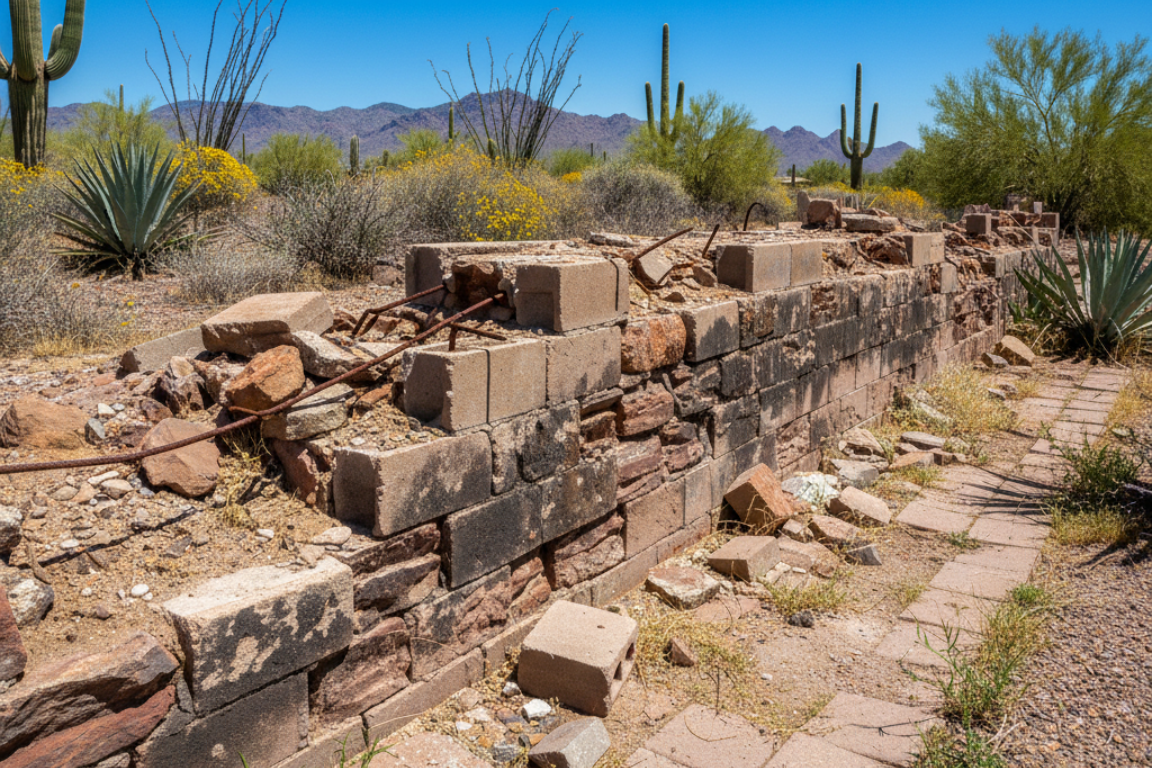

Problems rarely fix themselves. Leaning sections, cracking surfaces, soil loss, and drainage issues all point to structural stress below ground. Extreme heat and regular irrigation accelerate these issues faster than many homeowners expect. Addressing warning signs early helps avoid system collapse, protects nearby patios or driveways, and reduces repair costs. A proper evaluation allows repairs or replacement to happen before damage spreads to surrounding areas.
Types of Retaining Walls We Build
List of Services
-
Concrete Retaining WallList Item 1
Offers strength and long service life. These walls handle higher loads and taller grade changes. Reinforced concrete walls work well near driveways, homes, and load-bearing areas. They also pair well with concrete patios and walkways.
-
Block Retaining Wall SystemsList Item 2
Use modular units designed to lock together and resist soil pressure. These systems work well for residential yards and decorative applications. Proper drainage and base preparation are key to performance.
-
Stone Retaining WallsList Item 3
Stone wall builders create installations with natural stone for a textured appearance. These installations fit well with desert landscapes and outdoor living areas. Structural support and drainage remain essential, even with decorative stone designs.
Our Retaining Wall Installation Process
Building a retaining wall requires planning, correct materials, and careful construction. This process supports soil control, drainage, and long-term performance. In Arizona, assembled pieces must handle heat, shifting soil, and regular irrigation. Our installation process focuses on proper base work, water control, and alignment so the structure performs as intended.
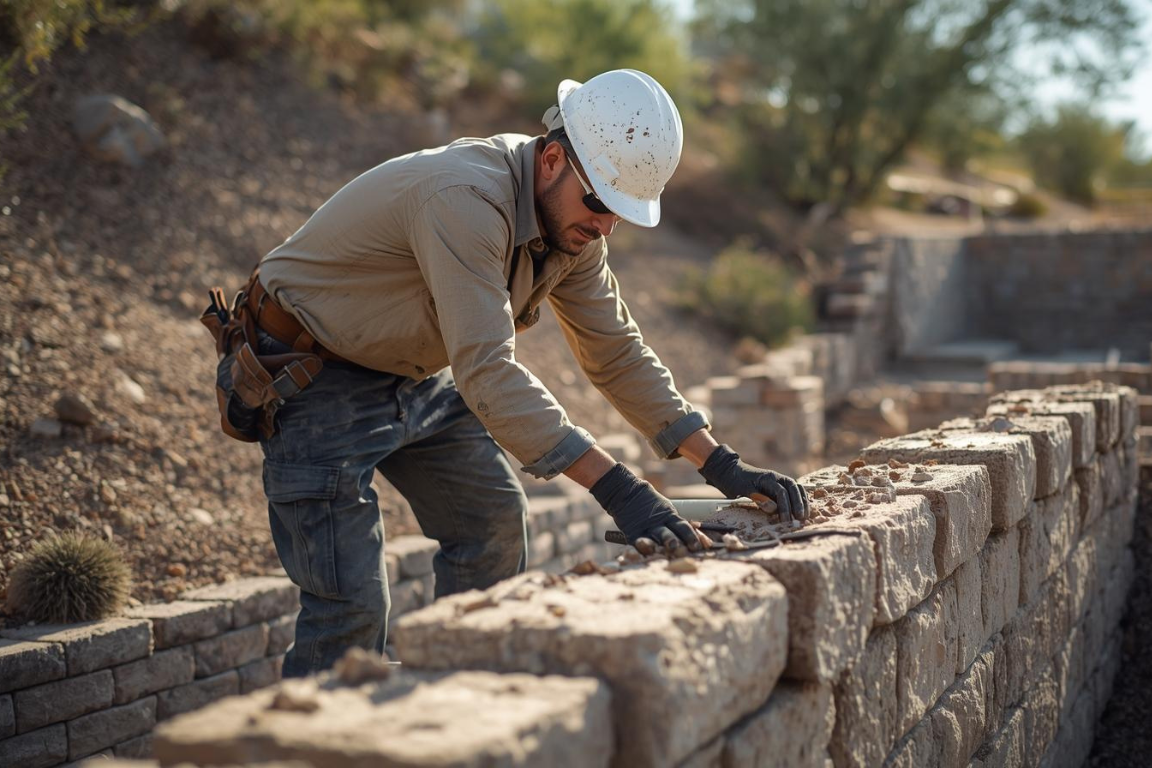
A retaining wall performs best when each installation step is completed with care. Planning, excavation, drainage, and proper backfill all work together to support the structure. In desert climates like North Phoenix, ignoring any part of the process increases the risk of movement or failure. A structured installation approach helps retaining walls manage soil pressure and water flow for years to come.
What Affects Retaining Wall Cost
Retaining wall cost depends on several factors. Height and length affect material and labor needs. Soil conditions and slope severity also influence excavation and reinforcement requirements. Drainage design plays a role in overall cost. Material choice matters as well. Concrete differs in cost from stone or block systems. Access to the site and removal of existing constructions can also impact pricing. A site visit allows a retaining wall company to review conditions and provide accurate guidance based on your property.
Retaining Wall Repair vs Replacement
Retaining wall repair may work for minor issues such as small cracks or surface damage. Systems that lean, separate, or show drainage failure often require replacement. Repairing without fixing drainage and base problems leads to repeat failure. Replacement allows correction of base depth, drainage, and reinforcement. This approach provides long-term stability rather than short-term fixes. A retaining wall contractor can assess whether repair or replacement best fits your situation.
Why Hire a Professional Retaining Wall Contractor
Solid construction handle soil pressure and water flow. Improper construction risks damage to nearby structures and outdoor areas. Professional retaining wall builders understand load forces, drainage design, and reinforcement needs. Hiring an experienced concrete company helps protect your investment and your property. Professional installation reduces the risk of failure and future repair costs. Copper Rock Concrete provides retaining wall installation across in North Phoenix neighborhoods. Our team understands local soil conditions and drainage challenges unique to the area.
Frequently Asked Questions About Retaining Walls
Homeowners often have questions before starting a construction project. Materials, drainage, cost factors, and lifespan all affect the final result. In North Phoenix, soil movement, heat, and irrigation raise concerns that do not apply in other regions. This FAQ section addresses common questions we hear from property owners who want clear expectations before work begins. Each answer explains what to expect, how they perform over time, and why proper construction matters in desert conditions. These questions help you decide when repair makes sense and when a new wall offers better long-term value.
How long does a retaining wall last in Phoenix?
A properly built structure can last many years in the Phoenix climate. Lifespan depends on design, drainage, and materials used. Construction with proper base depth and drainage handle soil pressure better over time. Poor drainage shortens lifespan by allowing water pressure to build behind it. Regular inspection helps identify issues early.
Do retaining walls need drainage?
Yes. Drainage is critical for performance. Water trapped behind an area increases pressure and causes movement or cracking. Drainage systems guide water away from the wall and protect the structure. This step is especially important in desert areas where irrigation and storms affect soil moisture.
Can a retaining wall increase property value?
Yes. They can increase usable outdoor space and protect property features. Walls that support patios, walkways, or landscaped areas improve function and appearance. Proper construction helps avoid erosion damage that can reduce property value over time.
Is a permit required for construction?
Permit needs depend on height and location. Some walls require permits due to safety and zoning rules. A builder can review local requirements during planning.
How do I know if my wall needs replacement?
Leaning, cracking, or separation are signs of structural failure. Water pooling or soil pushing through the wall also signals problems. A professional inspection helps determine whether repair or replacement is the safer option.